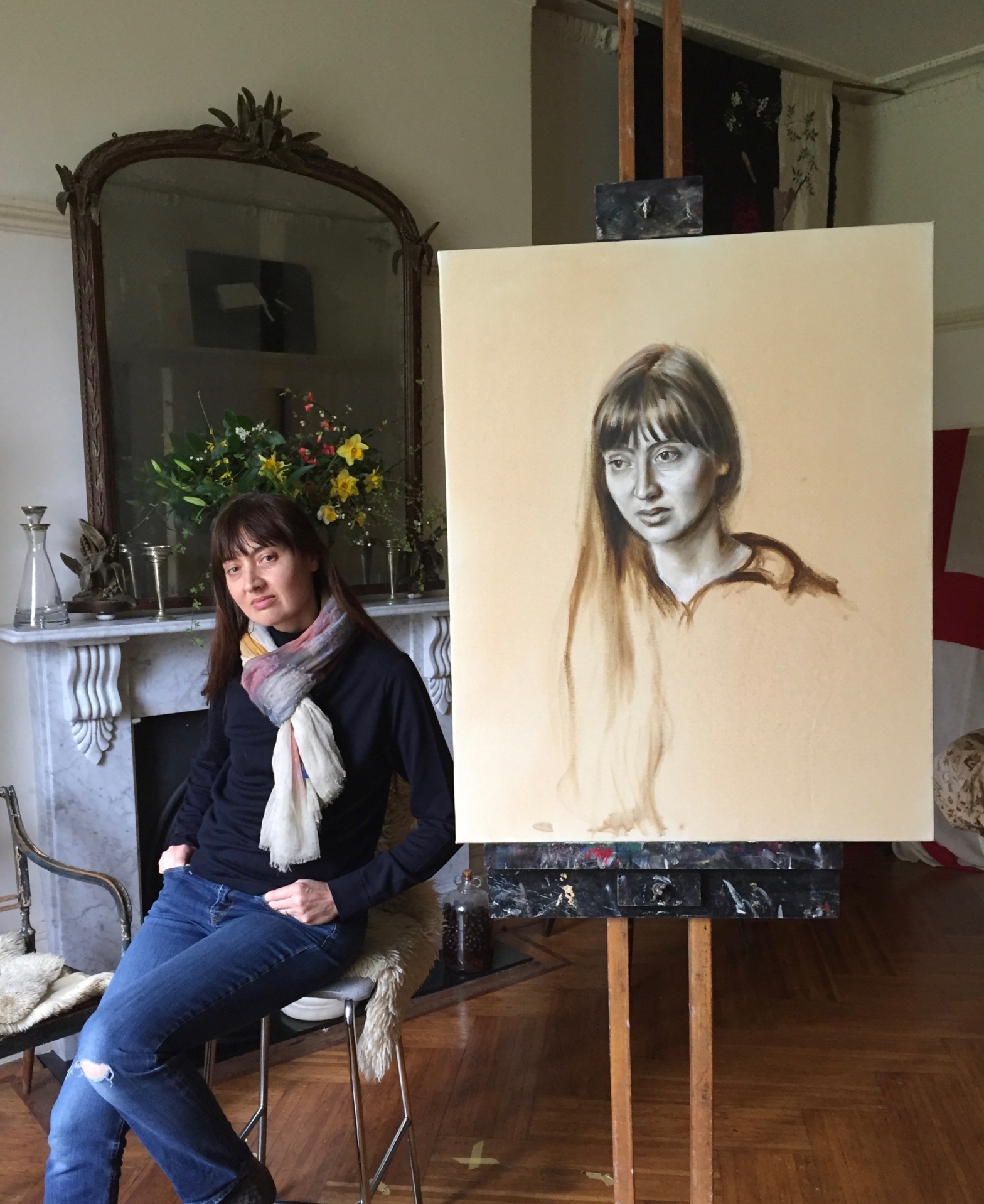
Symposium on Regenerative Colour

Carole Collet, my awesome colleague at Central St Martins, is curating our first event on the 29th June, under the auspices of Maison 0 and thanks to the generous support of the Sustainable Angle.

We will be discussing all types of colour, from bacterial beauty to the deep black harvested from air pollution, drawing on the full spectrum of alternatives to petrochemicals, we look forward to presenting you the prism of the future.

Please register at The Sustainable Angle’s Future Fabric Expo.

The Crutchley Archive

Next week, a significant webinar organised by the SDC will be key for all dyers of tomorrow to attend, it is the presentation of the Crutchley Archive  https://register.gotowebinar.com/register/4389320097711158029 by Dr Anita Quye, Senior Lecturer in Conservation Science and Head of History of Art at the University of Glasgow.

I first heard about the Crutchley archive reading Dominque Cardon’s book: Des Couleurs pour le Lumieres where she repeatedly compares Antoine Janot’s recipes from the South of France to their English counterpart, notably for the bright red of the official “red tape”.

This beautiful scarlet of “the Levant”, mixing fustic with a tin mordant used on a cochineal vat, created fiery reds such as “feu de grenade” and “jujube”. The Crutchley archive demonstrates the 18th century’s taste for the Orient; as we attempt to rediscover natural dyes and search how to implement what has become a craftsman knowledge to be used only in symbolic quantities for archival purposes, these books reveal industrial volumes and how to guarantee bright vivid colours, that are fast.

They are thus of consequence, to inform in best practise of using bio-based dyes; using historical, documented, measured, empirical know-how from a pre-petrochemical era. We should attend with open arms and dyepots, eager to learn again how to deliver local colour to London design houses.
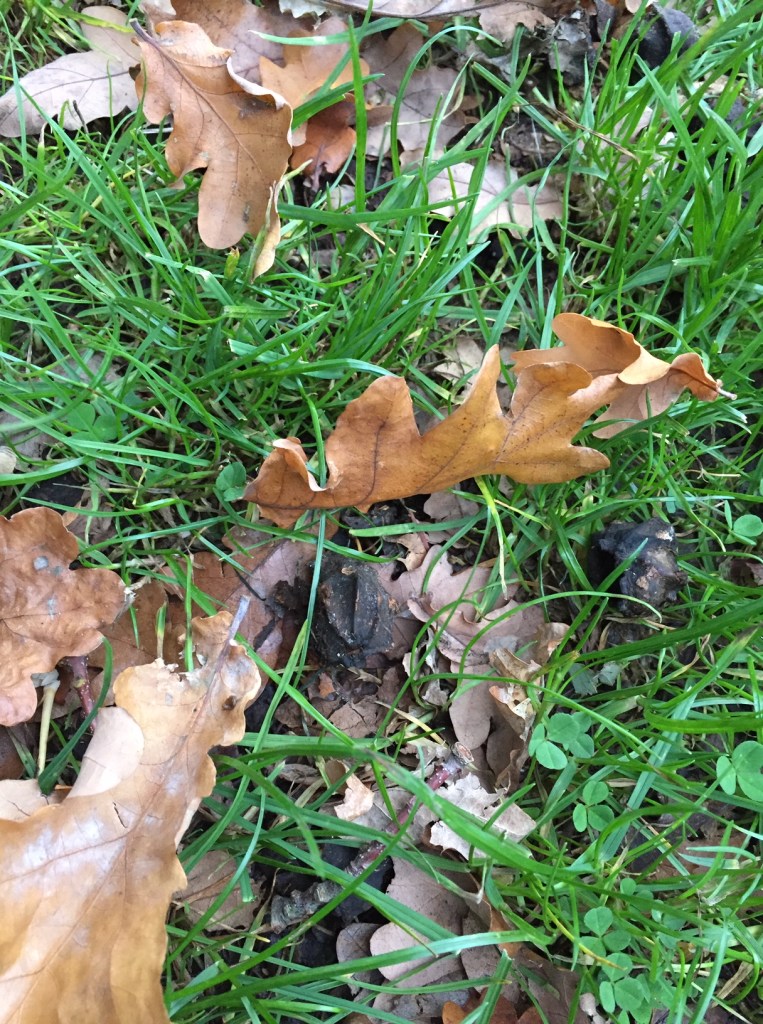
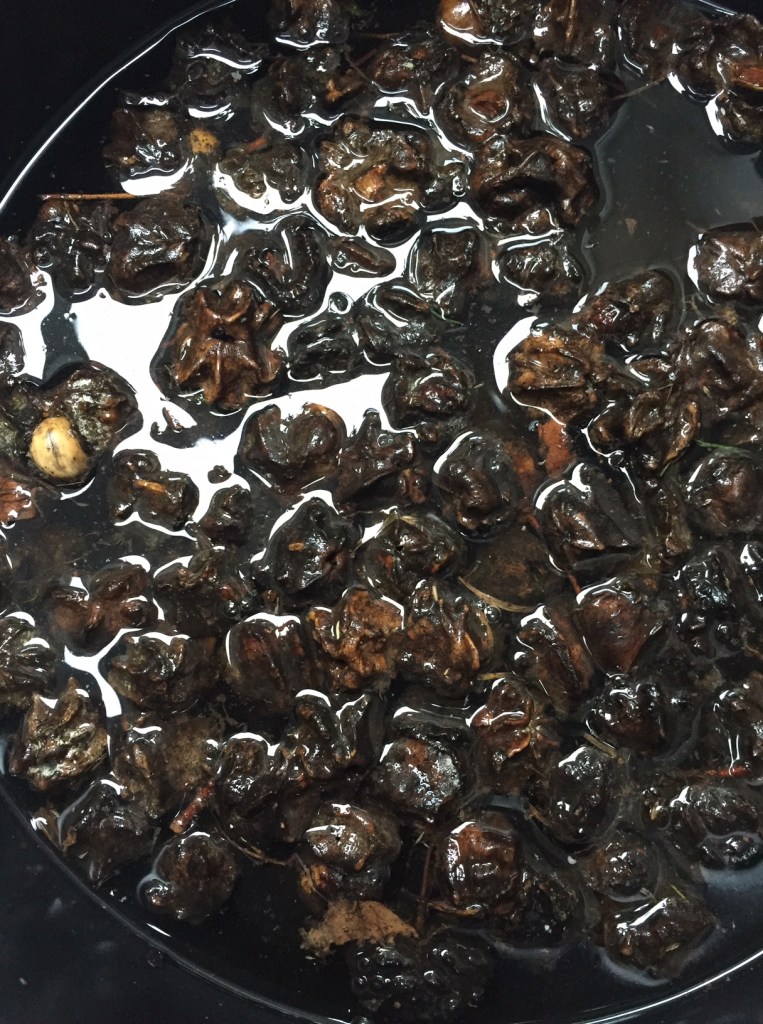
Oak galls

I recently acquired Dominique Cardon’s workbook “Antoine Janot’s colours” and noted how important the use of gallnuts is in most of his recipes, associated with madder or logwood. oak galls seem the key to tempering colour to obtain deeper blacks and also complex yellows, fauves and rich reds.

Living near beautiful Greenwich Park with its numerous historic tudor oaks, it seemed timely to go oakgall gathering before they all start to decompose and breakdown into the soil over winter. Recent autumnal winds have brought a shower of windfall acorns and galls and we are lucky in London to have access to so many of natures gifts to artisan dyers.

On silk the resulting colour was a rich, shining antique golden brown, full of sunshine. Overdyed on logwood this built a complex deep brown very suited to silk and complementing many skin tones. Accessible to any English dyer, one can understand why this was such a key ingredient for 18th century dyers as the beautiful oak tree was readily providing galls around the country, free for all to harvest. I cannot understand why more artisans today are not dyeing with oak, which is free, as opposed to the trendy avocado. I picked enough to also make a steam bundle for an essentially english eco-print: oak leaves wrapped and steamed over oakgalls. The sunny flavonoids produce an abstract leaf imprint easily distinguishable as the iconic oak.

I would encourage all dyers to go and collect the spiky gallnuts and stock up for the winter as the rich dye liquor produces such a fundamental building block to many colours in the western dye repertoire. And a few hours out walking amidst the great oaks rekindles the spirit…